
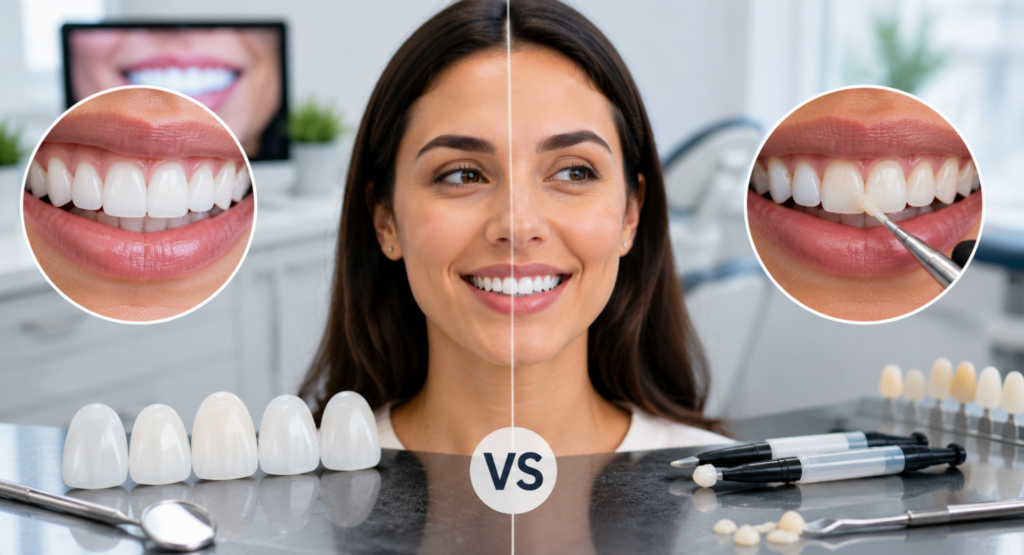
A healthy, attractive smile can improve confidence and appearance, so many patients consider cosmetic dentistry. Two prominent options are porcelain veneers and composite bonding. This article explains both procedures and compares their application, costs, and expected outcomes to help you choose the appropriate treatment for your smile makeover.
What Are Porcelain Veneers and Composite Bonding? Understanding These Cosmetic Dentistry Options in Markham
Porcelain veneers and composite bonding are established cosmetic techniques for improving tooth appearance. Porcelain veneers are thin, custom-made porcelain shells bonded to the front of teeth to correct chips, discoloration, and gaps. Their strength and lifelike appearance make them a preferred long-term option for many patients.
By contrast, composite bonding uses tooth-colored resin applied directly to the tooth to repair minor damage or improve appearance. It is typically less invasive than veneers and can often be completed in a single appointment. The appropriate choice depends on the patient’s clinical needs and aesthetic goals.
How Are Porcelain Veneers Applied? Key Procedure Steps Explained
Porcelain veneer treatment follows defined steps to ensure a natural fit and appearance. The process begins with a comprehensive consultation to assess the patient’s needs and aesthetic objectives.
- Consultation: The dentist discusses the patient’s concerns and aesthetic goals, helping them understand the potential outcomes.
- Enamel Reduction: The dentist then carefully removes a small amount of enamel from the front surface of the teeth, allowing the veneers to fit seamlessly.
- Impressions: Dental impressions are taken to create custom veneers that match the shape and color desired by the patient.
- Temporary Veneers: While the permanent veneers are crafted, temporary veneers may be placed to protect the teeth and provide a preview of the final result.
- Bonding: Once the veneers are ready, they are securely bonded to the teeth using dental cement, finalizing the procedure.
This meticulous approach preserves tooth function and patient comfort while delivering the desired aesthetic outcome.
What Is Composite Bonding? Overview of the Procedure and Materials Used
Composite bonding is a versatile procedure that uses tooth-colored composite resin to correct minor dental imperfections. The technique is straightforward and frequently completed in a single appointment, offering an efficient option for eligible patients.
- Preparation: The dentist prepares the affected tooth by cleaning it and may apply a special solution to help the resin bond effectively.
- Application of Resin: The composite resin is then applied in layers, sculpting it into the desired shape to closely match the natural appearance of surrounding teeth.
- Hardening: A special light is used to harden the resin quickly, securing it into place.
- Finishing Touches: Lastly, the dentist shapes and polishes the bonded area to create a smooth finish that integrates seamlessly with the existing tooth structure.
Composite bonding provides immediate improvements for minor flaws without the commitment or cost associated with porcelain veneers.
How Do Porcelain Veneers and Composite Bonding Compare in Cost and Durability in Markham?
Cost and durability are key considerations when choosing between cosmetic options.
What Is the Average Price of Porcelain Veneers in Markham?
In Markham, the average price of porcelain veneers typically ranges from $1,000 to $2,500 per tooth, depending on the complexity of the case and the experience of the dentist. This investment reflects the quality of materials used, the need for customization, and the permanence offered by veneers. For those seeking permanent solutions, understanding the nuances of other restorative options such as Crowns and Bridges in Markham might also be beneficial.
Composite bonding is typically more affordable, often costing about $300 to $800 per tooth. Although it generally has a shorter lifespan than veneers, it offers an effective short-term improvement at lower cost.
Which Cosmetic Dentistry Option in Markham Is More Suitable for Your Smile Makeover Goals?
Selection depends on clinical needs, aesthetic aims, and budget.
- Long-Lasting Results: For those seeking a long-term, durable solution, porcelain veneers are generally the better option due to their strength and resistance to staining.
- Minor Repairs: If the primary objective is to correct minor imperfections or enhance the appearance with immediate results, composite bonding could be the more suitable choice.
- Budget Considerations: Patients should also consider their budget, as veneers represent a higher financial commitment than composite bonding.
Ultimately, the most suitable option depends on the patient’s unique circumstances and desires for their smile.
Why Choose Swan Dental for Porcelain Veneers and Composite Bonding in Markham?
Selecting the right practice is essential to achieve the desired outcome. Swan Dental distinguishes itself through its commitment to high-quality care and demonstrated expertise in cosmetic dentistry.
- Expertise of the Dental Team: The team at Swan Dental comprises experienced professionals skilled in both porcelain veneer application and composite bonding. Their knowledge ensures that patients receive tailored treatment plans that meet their specific needs.
- Technology Used in Procedures: Swan Dental utilizes advanced technologies to enhance the precision and comfort of dental procedures, ensuring optimal results and patient satisfaction.
- Commitment to Patient Care: The clinic prioritizes patient care, ensuring every step of the procedure is comfortable and meets patients’ highest expectations.
What Advanced Technologies Does Swan Dental Use for Smile Makeovers?
Swan Dental uses advanced technologies, such as digital imaging and CAD/CAM systems, to improve the precision of veneer fabrication and composite bonding. These tools enable personalized treatment planning and more accurate, aesthetic results.
How Does Swan Dental Prioritize Patient Care and Satisfaction?
Patient satisfaction is central to Swan Dental’s approach. The team provides individualized care, listens to each patient’s concerns, and tailors treatment plans accordingly. Testimonials highlight the clinic’s personalized methods and dedication to a positive experience.
What Are Patient Experiences and Success Stories With Porcelain Veneers and Composite Bonding at Swan Dental?
Patient feedback provides practical insight into treatment outcomes. Many patients report positive transformations after receiving porcelain veneers or composite bonding at Swan Dental.
- Real Patient Results: Many have expressed satisfaction with their enhanced smiles, noting a significant boost in confidence.
- Before and After Comparisons: Success stories often include impactful before-and-after images showcasing the dramatic improvements achieved through these cosmetic procedures.
- Patient Satisfaction Indicators: Feedback indicates high levels of satisfaction, with numerous referrals from happy patients spanning years of service.
What Are Common Questions About Porcelain Veneers and Composite Bonding in Markham?
Patients commonly have questions when considering veneers or bonding. Frequently asked items include:
- How long do porcelain veneers last? Porcelain veneers typically last between 10 to 15 years with proper care.
- Is composite bonding reversible? Yes, composite bonding can be removed or adjusted if needed, making it a flexible solution.
- What are the maintenance requirements? Regular dental check-ups and good oral hygiene practices are essential for maintaining both veneers and bonded teeth.
Addressing these concerns helps patients make confident decisions. For further inquiries or to schedule a consultation, please reach out to Swan Dental.
Frequently Asked Questions
1. What are the advantages of choosing porcelain veneers over composite bonding?
Porcelain veneers offer superior durability and stain resistance compared with composite bonding and can correct many imperfections while providing a natural appearance. They are preferred for long-term smile enhancement but cost more and require greater tooth preparation. The decision depends on desired longevity and budget.
2. How do I care for porcelain veneers?
Caring for porcelain veneers follows standard oral hygiene: regular brushing, flossing, and routine dental examinations. Avoid biting hard objects and using teeth as tools. With appropriate maintenance, veneers can preserve their appearance for many years.
3. Can composite bonding discolor over time?
Composite bonding can stain over time, particularly with exposure to coffee, tea, tobacco, or red wine. Unlike porcelain, composite materials may require periodic touch-ups or replacement. Good oral hygiene, reduced intake of staining substances, and regular dental reviews help maintain appearance.
4. Is there a recovery period after getting veneers or bonding?
There is typically no prolonged recovery after veneers or bonding; most patients return to normal activities immediately. Temporary sensitivity to temperature is possible—consult your dentist if it persists. Your clinician will provide post-treatment guidance.
5. How do I know which option is right for me?
Choice depends on the severity of dental defects, aesthetic objectives, budget, and desired longevity. A cosmetic dentist can assess your teeth and recommend the most appropriate option based on a clinical examination.
6. Are there any risks involved with these cosmetic dental procedures?
Both procedures carry risks. Veneers may cause temporary sensitivity after enamel reduction, and poorly fitted veneers can affect function. Composite bonding may chip or stain over time. Choosing an experienced clinician and following care instructions reduces these risks.
7. What is the best way to prepare for a consultation about veneers or bonding?
Prepare for consultation by noting your goals and concerns, bringing photos that reflect your desired outcome, and sharing your dental history and any allergies. Discuss budget and timeline so the dentist can propose a tailored treatment plan.
Conclusion
Choosing between porcelain veneers and composite bonding can improve your smile and confidence. Each option has distinct benefits—long-term durability versus a quicker, lower-cost solution. Review the differences with an experienced clinician to determine the best approach for your needs. Consider scheduling a consultation with Swan Dental to discuss your cosmetic dentistry options.