

A dental emergency can be alarming and may leave you uncertain about the correct response. This article outlines clear, practical steps to follow during an urgent dental situation. It explains immediate actions, warning signs that require professional care, and the emergency services offered by Swan Dental, your trusted Dentist in Markham. Knowing these points can reduce stress and help you obtain timely, appropriate treatment.
This guide explains immediate relief measures, criteria for seeking professional care, common emergency signs, and the emergency procedures available at Swan Dental. It also covers home management of pain and swelling, how to book urgent appointments, and basic cost considerations. The intent is to provide you with a concise, usable overview for navigating a dental crisis.
For immediate relief during a dental crisis in Markham, follow these steps:
When confronted with a dental emergency, prompt and composed action is essential. The following steps provide immediate relief and help prepare you for professional care.
- Stay Calm: Panic can exacerbate symptoms. Take measured breaths to steady yourself.
- Identify the Issue: Assess whether the problem is a toothache, fracture, avulsion, or another condition.
- Contact Swan Dental: Reach out to Swan Dental for clinical guidance and to arrange an urgent appointment.
- Pain Management: Use appropriate over-the-counter analgesics as directed to control discomfort until you can be seen.
- Avoid Certain Foods: Do not eat hard or sticky foods that may worsen the injury.
Following these steps helps control symptoms immediately and ensures you receive professional assessment and treatment without delay.
When to Seek Professional Help:
Timely professional assessment is critical for effective treatment and to prevent complications. The following signs indicate the need for prompt dental care.
- Severe Pain or Swelling: Intense pain or facial swelling may reflect infection or significant trauma.
- Knocked Out or Broken Tooth: Teeth that are avulsed or structurally compromised require immediate attention.
- Persistent Bad Taste or Foul Breath: These symptoms can indicate an active infection.
- Bleeding Gums or Signs of Infection: Uncontrolled bleeding or purulent discharge necessitates urgent evaluation.
If you observe any of these symptoms, contact a dental professional promptly to reduce the risk of worsening outcomes.
What Are the Common Signs of a Dental Emergency in Markham?
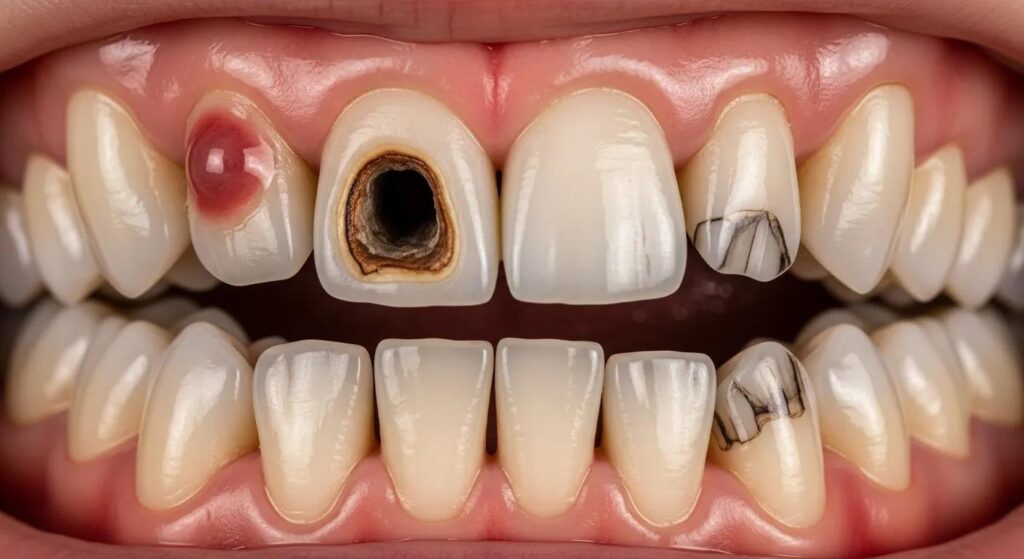
Recognising emergency signs allows for faster intervention. Typical indicators include severe or persistent tooth pain, visible fractures or chips, and swelling that may signal abscess formation. Early recognition facilitates prompt treatment and better outcomes.
- Toothache Symptoms: Persistent or severe pain often denotes an underlying infection or structural problem.
- Signs of Broken or Cracked Tooth: Visible chips or cracks can cause pain and increase infection risk.
- Swelling and Pain Indicators: Gum or facial swelling combined with pain can indicate an abscess or spreading infection.
How to Recognize Toothache and Dental Pain Symptoms
Toothache presentations vary and should be evaluated by a clinician. Common symptoms include sharp or throbbing pain, heightened sensitivity to temperature changes, and discomfort when biting. These signs help clinicians determine urgency and appropriate treatment.
- Sharp or Throbbing Pain: Frequently associated with pulpitis or abscess.
- Sensitivity to Hot or Cold: May indicate nerve involvement.
- Pain When Biting: Suggests structural damage or occlusal issues.
Toothache is a debilitating condition, often with mild to excruciating pain, swelling, eating difficulties and insomnia. This study aims to delineate the profiles of patients seeking emergency dental care, focusing on the diagnosis, treatment, and outcomes following non‑surgical root canal treatment.Endodontic emergency patients’ profile and treatment outcome–a prospective cohort study, SR Haug, 2024
What Indicates a Broken or Cracked Tooth Emergency?
A broken or cracked tooth can progress to infection or cause ongoing pain if not managed. Indicators include visible damage, acute pain under pressure, and sensitivity. Prompt assessment reduces the risk of further structural loss or infection.
- Visible Damage: Noticeable chips or cracks on inspection.
- Pain Levels: Significant pain when pressure is applied to the tooth.
- Immediate Actions to Take: Rinse the mouth with warm water and apply a cold compress externally to limit swelling until you can be seen.
What Immediate Steps Can You Take for Emergency Toothache and Broken Tooth Relief?
Immediate measures can reduce pain and limit complications before clinical care. The following interventions are appropriate first steps.
- Home Remedies: Rinse with warm salt water to reduce inflammation and clean the area.
- Pain Management Techniques: Use recommended over‑the‑counter analgesics for temporary relief.
- When to Seek Help: If pain persists or intensifies, arrange professional assessment without delay.
How to Manage Dental Pain and Swelling at Home Safely
Safe, short‑term measures can control symptoms until you receive professional care. Apply a cold compress to the cheek for swelling, use ibuprofen or acetaminophen as directed for pain, and perform warm salt‑water rinses to soothe tissues.
- Cold Compress Usage: Apply externally to reduce swelling and numb the area.
- Over-the-Counter Medications: Ibuprofen or acetaminophen can be used according to dosage instructions.
- Rinsing Techniques: Warm salt water rinses help cleanse and soothe the oral tissues.
When Is Self-Care Insufficient and Emergency Dental Care Needed?
Self-care provides temporary relief but does not replace clinical treatment in many cases. Seek urgent care if pain is unmanageable with medication, signs of infection (fever, increasing swelling) appear, or symptoms persist beyond 24–48 hours.
- Severity of Pain: Unrelenting pain despite analgesics.
- Signs of Infection: Fever, progressive swelling, or spreading redness.
- Duration of Symptoms: Symptoms that persist or worsen after a day or two require evaluation.
What Emergency Dental Procedures Does Swan Dental Offer in Markham?
Swan Dental delivers a range of emergency interventions to address acute dental problems. Services include emergency extractions for irreparably damaged teeth, root canal therapy to treat infected pulps, and urgent restorations such as fillings to stabilise decayed teeth.
- Emergency Tooth Extractions: For teeth that are severely damaged or infected.
- Root Canal Treatment: To save a tooth that is infected or decayed.
- Dental Fillings: For cavities that require immediate attention.
These services are provided promptly to alleviate pain and reduce the risk of further complications.
Patient knowledge and treatment preferences, particularly regarding root canal therapy, inform clinical decision‑making and improve emergency care outcomes.
Patient Knowledge & Preferences in Dental Emergencies
This study evaluated patient knowledge, awareness, and treatment preferences for root canal therapy among individuals presenting to an endodontic emergency clinic. The survey identified factors influencing preferences and decision making in acute pain scenarios.
Assessment of Knowledge, Awareness, and Treatment Preferences Regarding Root Canal Therapy Among Endodontic Emergency Patients, İ Özden, 2025
How Does Emergency Tooth Extraction and Broken Tooth Repair Work?
Emergency extraction and restorative procedures follow a standard clinical pathway. The dentist determines indications, administers local anaesthesia, performs the required procedure, and provides post‑operative instructions to promote healing and prevent complications.
- Indications for Procedures: Severe decay, infection, or trauma may necessitate extraction.
- Step-by-Step Process: The dentist will assess the tooth, administer anesthesia, and carefully remove the tooth if necessary.
- Expected Outcomes: Patients can expect relief from pain and prevention of further complications.
What Pain Management and Infection Prevention Treatments Are Available?
Effective emergency care includes targeted pain control and infection management. Clinicians may prescribe analgesics for severe pain and antibiotics when infection is suspected. Ongoing evaluation ensures that treatment is adjusted if symptoms do not improve.
- Types of Pain Relief: Prescription medications may be provided for severe pain.
- Infection Prevention Methods: Antibiotics may be prescribed to combat infection.
- When to Seek Further Help: If symptoms do not improve, further evaluation may be necessary.
When and How Should You Book an Urgent Dental Appointment in Markham?
Booking an urgent appointment requires clear communication. Contact Swan Dental by phone, describe your symptoms and relevant dental history, and indicate that the issue is an emergency to facilitate prioritisation.
- Contact Methods: Call Swan Dental directly to explain your situation.
- Information to Provide: Be ready to describe your symptoms and any previous dental history.
- Tips for Urgent Care: Mention that it is an emergency to prioritize your appointment.
What Is the Process for Scheduling Same-Day Emergency Dental Care?
Same‑day emergency care typically begins with a triage assessment to determine urgency. Contact the clinic early, provide clinical details, and prepare relevant medical and insurance information to expedite your visit.
- Assessment of Emergency: The dental team will evaluate the urgency of your situation.
- Contacting Swan Dental: Reach out as early as possible to secure an appointment.
- Preparation for Visit: Gather any relevant medical history and insurance information.
How to Contact Swan Dental Quickly During a Dental Crisis
Timely contact methods are essential in an emergency. Use the clinic phone number for immediate assistance, email for non‑urgent enquiries, or the online booking system to request appointments.
- Phone Number: Call (905) 471-7926 for immediate assistance.
- Email Contact: Reach out via email at mhndental@gmail.com for non-urgent inquiries.
- Online Booking Options: Visit the Swan Dental website for online appointment scheduling.
What Are the Costs and Insurance Options for Emergency Dental Care in Markham?
Costs for emergency dental care vary by procedure and clinical complexity. Verify coverage with your insurer and discuss payment methods with Swan Dental to understand your financial options prior to treatment when possible.
- Typical Costs: Emergency procedures can vary in cost depending on the treatment required.
- Insurance Coverage: Check with your insurance provider to understand what is covered.
- Payment Methods: Swan Dental offers various payment options to accommodate patients.
Frequently Asked Questions
What Are the Most Common Causes of Dental Emergencies?
Dental emergencies commonly result from trauma, progressive decay, and infections. Sports injuries, untreated cavities, and advanced gum disease often precipitate acute presentations. Accidents and biting hard objects also frequently cause fractures and avulsions.
How Can I Prevent Dental Emergencies?
Prevention focuses on routine oral care and risk reduction. Maintain twice‑daily brushing, daily flossing, and regular dental examinations. Use protective mouthguards for sports and avoid hard or sticky foods. Addressing dental concerns early reduces the risk of emergency situations.
What Should I Do If a Tooth Is Knocked Out?
If a tooth is avulsed, act immediately. Handle the tooth by the crown only and rinse gently with water—do not scrub the root. If possible, reinsert the tooth into its socket; otherwise, store it in milk or saline and seek emergency dental care right away, as prompt treatment improves the chance of reimplantation.
Are There Any Home Remedies for Dental Pain?
Home measures can provide temporary symptom relief but are not substitutes for clinical care. Warm salt‑water rinses reduce inflammation, cold compresses limit swelling, and over‑the‑counter analgesics relieve pain. Arrange professional assessment when symptoms persist or worsen.
What Should I Expect During an Emergency Dental Visit?
An emergency visit typically includes a focused history, clinical examination, and diagnostic imaging as required. The dentist will discuss treatment options—such as pain control, extraction, or restorative procedures—and provide a plan to address the underlying issue and relieve symptoms.
How Can I Manage Anxiety During a Dental Emergency?
Managing anxiety supports effective treatment. Use controlled breathing, bring a support person if possible, and communicate concerns to your dental team. Swan Dental can discuss sedation or analgesic options to improve comfort during urgent procedures.
What Are the Long-Term Effects of Ignoring a Dental Emergency?
Delaying care can lead to progressive infection, systemic health impacts, tooth loss, and the need for more extensive treatment. Early intervention reduces long‑term morbidity, treatment complexity, and overall cost.
What Should I Do If I Have a Severe Toothache Right Now?
If you have a severe toothache, rinse with warm salt water, take recommended over‑the‑counter analgesics, and contact Swan Dental promptly if the pain does not subside.
Can a Broken Tooth Be Saved or Repaired?
Many fractured teeth can be restored. Options include dental bonding or crowns to reconstruct the tooth. Timely treatment improves success rates; extraction is considered only when structural damage is irreparable.
- Repair Methods: Dental bonding or crowns may be used to restore the tooth.
- Success Rates: Many broken teeth can be successfully treated with timely intervention.
- When Extraction is Necessary: If the damage is severe, extraction may be the only option.
Conclusion
Preparation and prompt action improve outcomes in dental emergencies. Recognise the warning signs, apply appropriate immediate measures, and contact Swan Dental for urgent assessment and treatment. Familiarity with these steps helps protect your oral health and ensures timely, professional care when it is most needed.